Evidence at a Glance
A shared codebase built by a team with different experience levels.
Engine and game requirements evolved together through delivery.
Ingenium was completed on top of the custom engine.
Overview
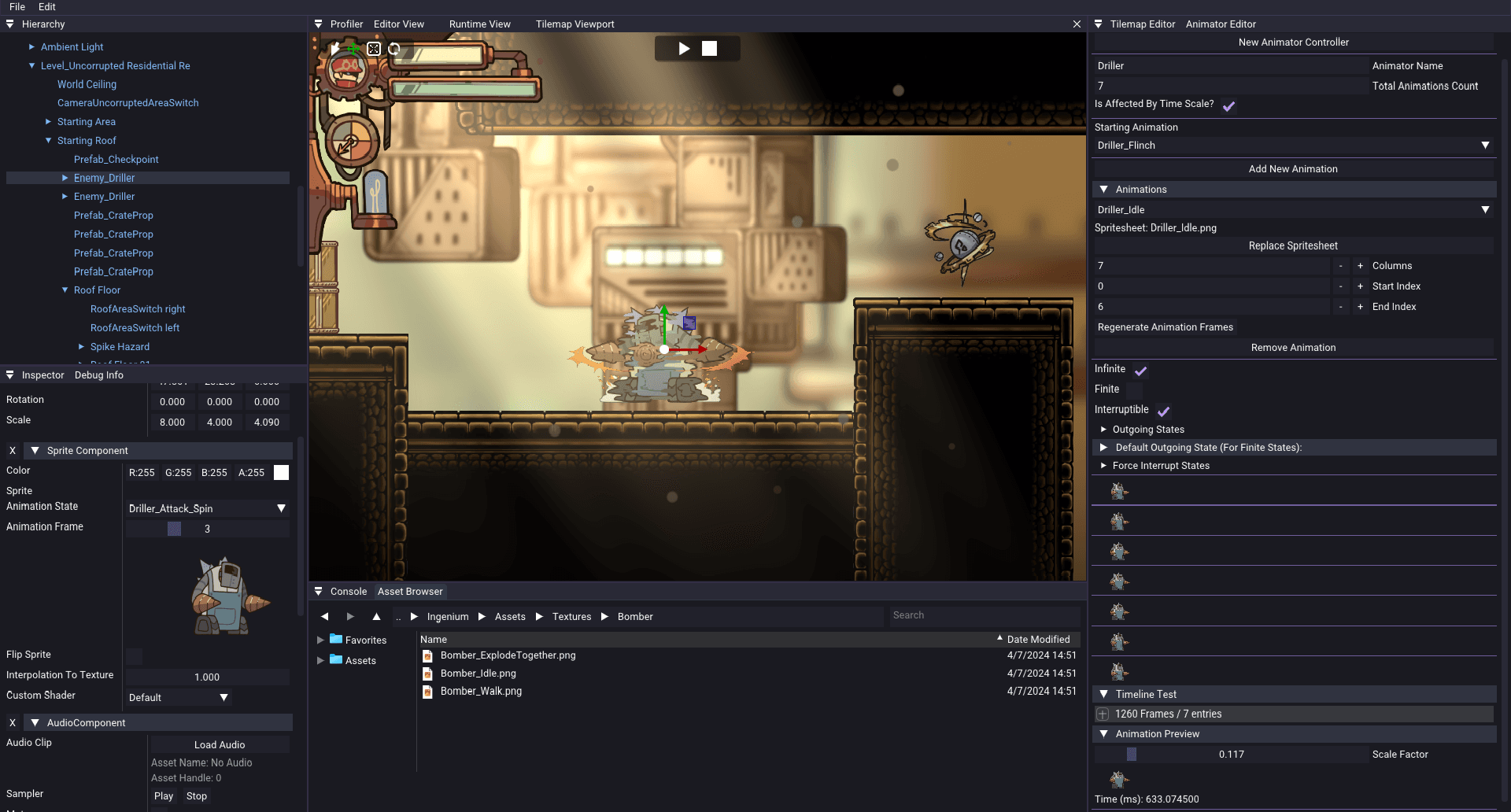
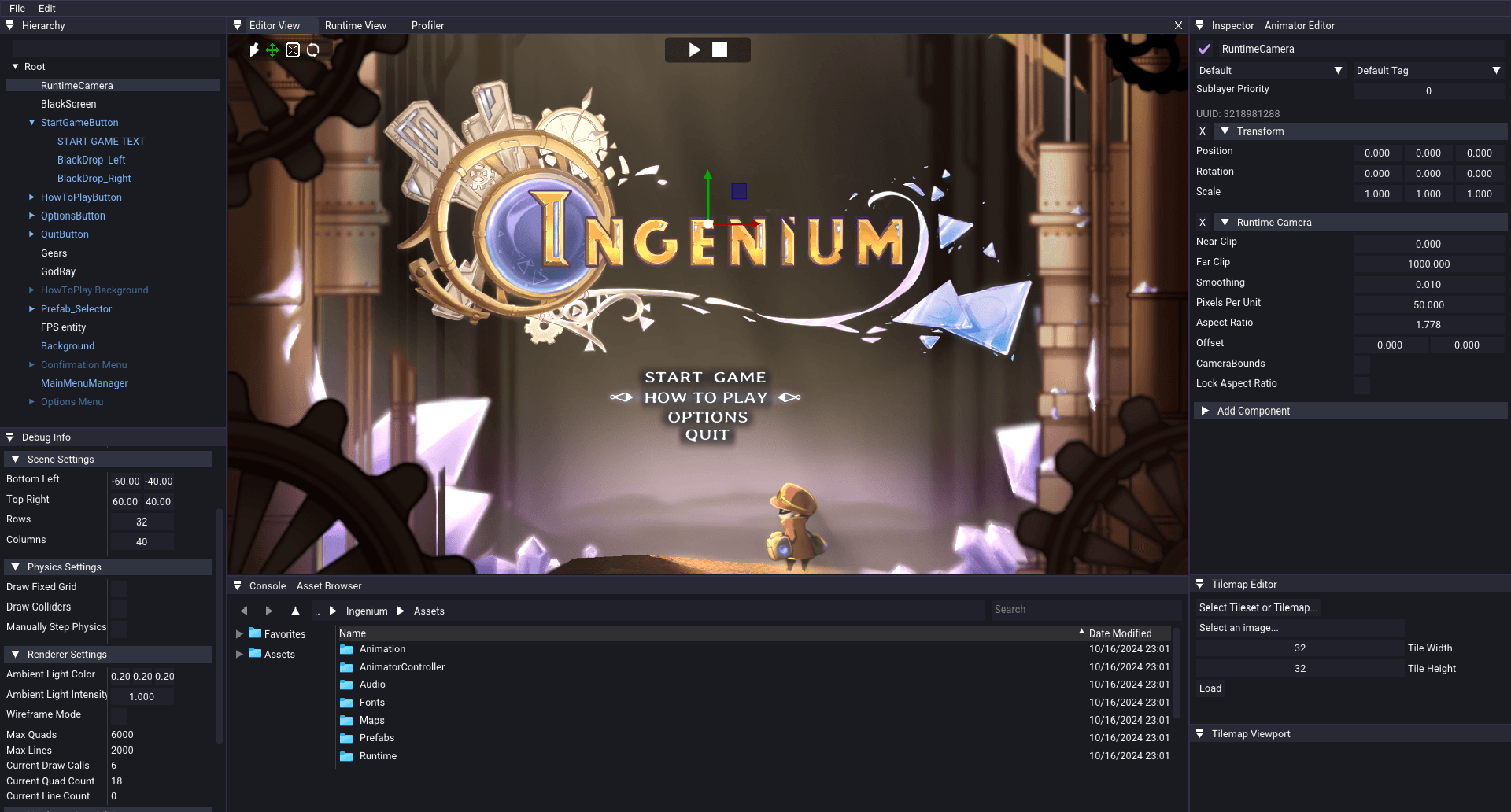
Celestia is a custom 2D engine built to ship Ingenium, a souls-like action platformer. Its success criterion was not merely rendering a scene: six engineers and a game team needed an editor, scripting, profiling, serialization, and runtime architecture they could use through a full production cycle.
As technical lead, I owned the overall architecture and implemented critical systems including the OpenGL renderer, ECS, profiler, editor tooling, and C#/.NET scripting through Mono. I also coordinated engineering work as game requirements and production deadlines changed.
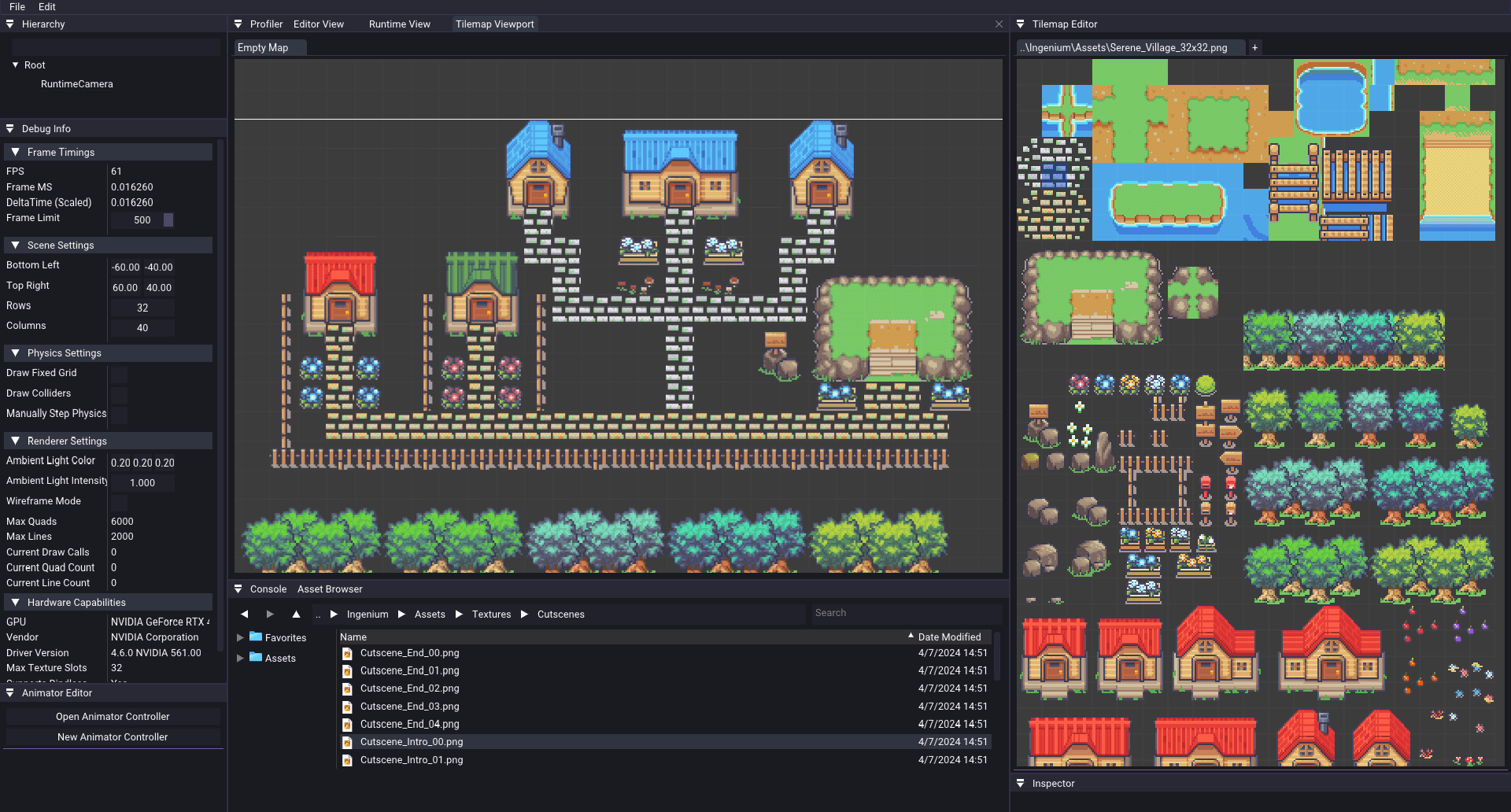
Building the engine beside the game forced architecture to remain practical. Tools such as the tile editor, hierarchy, inspector, title-scene workflow, and profiler existed because content production needed them, not as isolated portfolio checkboxes.
The Challenge
The engine had to mature quickly enough for a game to depend on it while a six-person team learned the architecture and contributed concurrently.
Late production changes created pressure to revise systems without invalidating content or forcing every discipline to wait for an ideal redesign.
Key Engineering Decisions
Build Tooling Around the Game Workflow
Editor, tile, hierarchy, inspector, and profiling work were prioritised according to production bottlenecks.
Use C++ for Runtime and C# for Gameplay
Native systems retained low-level control while Mono scripting gave gameplay work a faster, safer iteration surface.
Keep Game Objects Data-Oriented
A custom ECS separated reusable behavior and data instead of hard-wiring every game object into an inheritance tree.
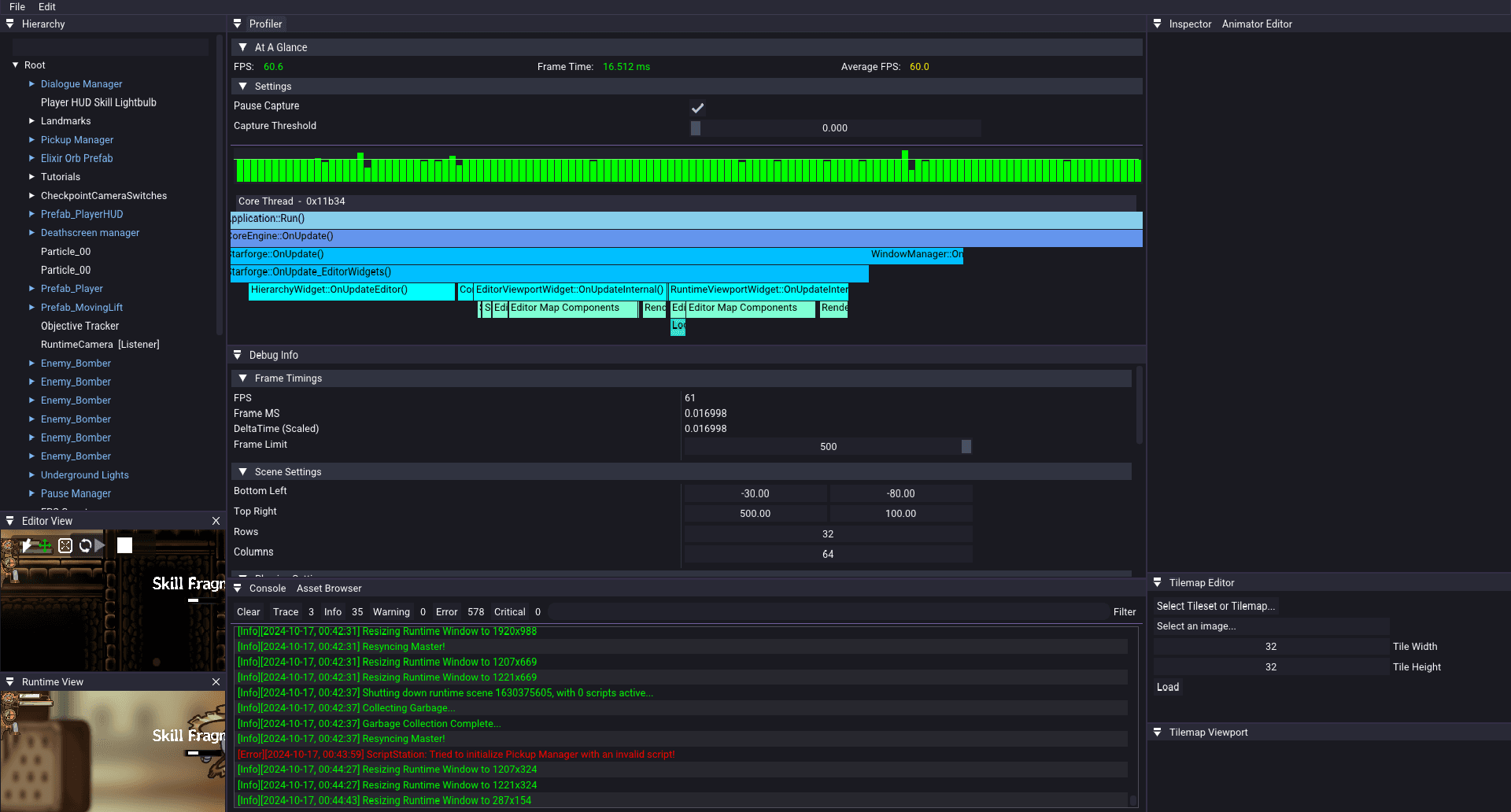
Profile During Production
Integrated profiling made performance investigation available to the team instead of relying on late manual instrumentation.
What I Owned
Results
Gallery
Video
Valuable Lessons
Tooling should be measured by the production bottleneck it removes, not the number of panels an editor contains.
A shippable compromise with a migration path can be more valuable than an elegant redesign that arrives after the deadline.